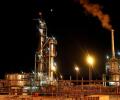
India, the world's third largest oil importing and consuming nation, is likely to save as much as Rs 1.8 lakh crore on import of crude oil and LNG if the trend of softening international energy rates continues, Icra said Wednesday. India, which meets over 85 per cent of its crude oil needs through imports, spent $242.4 billion on buying crude from overseas in the fiscal year ended March 31, 2025.
No immediate comment was available from airlines on the impact of the price hike on passenger fares.

The fiscal tilt towards capex benefits companies in investment-related sectors like capital goods, defence equipment, engineering & construction and metal & mining. The planned cut in revenue expenditure will weigh on companies in consumption sectors like FMCG, consumer durables and retail.
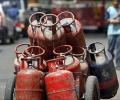
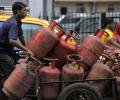
The price of non-subsidised LPG, which customers buy after using up their quota of 12 subsidised cylinders, was raised to Rs 922.50 per 14.2-kg cylinder in Delhi on July 1, the first hike in six months.
Indian Oil Corporation's (IOC's) Q2FY26 operating profit of 14,600 crore beat Street estimates and was up 16 per cent on a sequential basis. It surged 287 per cent over the year-ago quarter on account of an improved refining performance.

Government-controlled oil-marketing companies (OMCs) have held back petrol and diesel price revisions for a week and are expected to continue doing so, ostensibly owing to political reasons. It appears that the Centre has informally conveyed to the three major OMCs to not revise fuel prices for the time being, two people in the government said. This informal directive follows the talks between the Centre and states on cutting taxes and bringing the auto fuels under the good service tax regime not fetching the desired results, so far.
Petrol and diesel prices were cut by Rs 2 per litre each as state-owned oil companies ended a nearly two-year-long hiatus in rate revision, just hours before the general election schedule was announced.

The Trinamool Congress and the Communist Party of India (M) on Thursday opposed the proposed increase in the prices of LPG and other petroleum products recommended by an expert panel headed by former Planning Commission member Kirti Parikh, saying a new burden of raised prices would hit the common people hard.

The government will decide on increasing petrol, diesel, LPG and kerosene prices within the next 24-48 hours.
The oil ministry is in fact of the view that the government should bear the entire burden of the revenue losses incurred by the oil marketing companies, after the increase in prices is effected.

An unusual Congress protest against rising LPG prices.
A 14.2-kg subsidised LPG cylinder will cost Rs 494.99 in Delhi, while non-subsidised LPG rates have been cut by a steep Rs 120.50 per cylinder
Diesel prices may be hiked by Rs 10 per litre over a 10-month period and kerosene rates increased by same quantum over the next two years if a proposal being mulled in the Oil Ministry is accepted.

The retail selling price of petrol at Delhi would come down by Rs 1.82 a litre.

Aviation Turbine Fuel, or ATF, price at Delhi was cut by Rs 3,025.34 per kilolitre, or 4 per cent, to Rs 71,800.21 per kl, according to Indian Oil Corp, the nation's largest fuel retailer.
International crude oil prices crossed the $60 a barrel mark yesterday--up from a record low of $32.40 in December last year--on the back of improved sentiment over the economic recovery, especially in China and Europe.

State-owned Oil and Natural Gas Corp (ONGC) will add about Rs 8,000 crore (Rs 80 billion) to its profits annually from near doubling of natural gas prices from next fiscal.
International oil prices continue to be extremely volatile, falling on one day and rising thereafter, a top oil ministry official said explaining the reason behind no reduction in petrol and diesel prices despite softening in input cost, but could not say if the rates will be cut before Maharashtra elections. Global oil benchmark Brent crude futures fell below $70 per barrel last week -- the first time since December 2021 -- but gained thereafter. Brent was trading at $74.58 per barrel on Thursday while West Texas Intermediate advanced to trade at $71.71.

The main risk to the fiscal deficit arises from subsidies, which are threatening to far exceed the provision made for them in the Budget.
ATF or jet fuel price has been cut marginally while rate of non-subsidised cooking gas LPG has been hiked by Rs 27.50 a cylinder.

He felt particularly upset with the Left parties protesting on issues such as cooking gas and electricity prices and 'aam admi' pursuits rather than the broader picture.
Global crude oil prices have slumped by 49 per cent during the same period
With a high-powered ministerial panel on fuel pricing being scrapped, a cabinet committee may consider raising the prices of diesel, LPG and kerosene, Oil Minister S Jaipal Reddy indicated on Wednesday but refused to say when the issue would be taken up.
India's brittle energy security is inextricably linked to two opposing paradigms - fossil fuels, and the transition to green energy. The first powers the present; the second paves the way for Viksit Bharat in 2047.

The Congresshas announced a three-phased campaign, "Mehngai-mukt Bharat Abhiyaan".
A subsidised 14.2-kg cylinder will now cost Rs 425.06 in Delhi as against Rs 423.09 previously, according to State-owned oil firms
IOC and other state-run oil marketing companies such as BPCL and HPCL are suffering revenue losses on sale of fuel as the government has not allowed them to raise prices in line with the increase in international crude oil prices that are racing toward 100 dollar a barrel. India imports nearly three-fourth of its crude oil requirements.
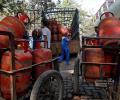
Petroleum and oil marketing companies raised the price of commercial liquid petroleum gas (LPG) cylinders by Rs 350.50 per unit and domestic LPG cylinders by Rs 50 per unit with immediate effect from Wednesday.
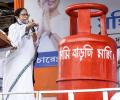
Banerjee, addressing a rally in Siliguri following her protest march over LPG price hike, said the prime minister made many "empty" promises over the years, and people no longer trust him.
While hinting that further cut in petrol and diesel prices was likely during the next revision, Petroleum Minister Ram Naik on Saturday ruled out any possibility of increase in prices of LPG and kerosene

Dr Manmohan Singh, the architect of India's economic reforms, had to literally face a trial-by-fire to ensure widespread acceptance of his path-breaking Union Budget of 1991 that saw the nation rise from its darkest financial crises.
Diesel prices are still under control with subsidies.
Costlier petrol, diesel and LPG pushed up inflation to 7.76 per cent during the week ended November 6 amid fears that it could rise further in the coming weeks after the full effect of the second round of price hike in petro products during the perio
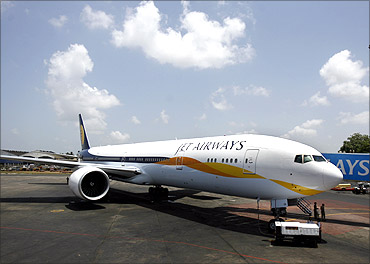
Jet fuel constitutes over 40 per cent of an airline's operating costs and the price cut will bring relief to the cash-strapped carriers.
A 14.2-kg subsidised LPG cylinder in Delhi will now cost Rs 507.42 as against Rs 505.34 previously, according to a price notification of State-owned fuel retailers.

The Congress and NCP workers staged protests against price rise outside a luxury hotel and the Bal Gandharva auditorium, where Irani attended events during her visit to the city.

Mercedes sells models ranging from A Class to Maybach, priced between Rs 28 lakh and Rs 1.67 crore.

The Congress took out marches and observed bandh at several places on Saturday to protest against rising fuel prices.
State-run oil marketing companies on Monday raised the security deposit for new cooking gas (LPG) connections to Rs 1,250 from the existing Rs 850 per cylinder, as also the price of cylinder regulator due to increase in input costs.
